A September launch thread crystallized a question that's been simmering in dev circles for months: why are AI agents still stuck in separate dashboards, cut off from where the work actually happens? This month’s list tracks the builders attacking that gap head-on.
We’re seeing agents that log into Gmail and GitHub, meeting tools that ditch the bot invite, and infrastructure that plugs models straight into Slack channels. The strongest signals come from startups pairing a concrete workflow with a credible path to distribution. The weaker ones are still figuring out reliability or their business model, sometimes both.
1. Skydive
What It Does
Skydive builds AI agents that log into your actual tools—Gmail, GitHub, Notion, Linear—and complete multi-step work there. An operator describes what they want done, and the agent handles the rest, giving non-engineering teams a way to automate cross-software workflows for research, updates, and operational tasks.
Why It's Trending
It launched publicly in September 2026, fresh off an $11 million Series A the previous September at a reported $100 million valuation. The pitch is unusually concrete: each agent gets its own cloud computer and a browser, with access to over 50 integrations.
Key Features
- No-code agents operate across Gmail, GitHub, Notion, Linear, and PagerDuty.
- Browser-based agents interpret tasks, log into software, and see work through to completion.
- Automates cross-tool workflows like ticket triage, status updates, and task routing.
Best For
- Business operations teams automating repetitive work across their SaaS stack.
- Enterprises testing cross-tool agents without building every integration themselves.
- Developers extending workflows across engineering and support systems.
What Makes It Different
Instead of assembling API actions on a workflow canvas, Skydive gives each agent a cloud computer and a browser. That's more flexible than traditional automation, but it puts them in direct competition with internal automation stacks and the new wave of agent builders.
Market Opportunity
They're going after the huge pool of teams already running on SaaS but still moving information between tools manually. The $11 million Series A and 50+ integrations show serious ambition, but we haven't seen customer-scale proof yet.
Things to Consider
- Public materials don't disclose customer names, revenue, uptime, or ROI.
- Browser-level access to critical tools creates a major safety and permissions burden.
- They're competing with traditional RPA, internal automation, and other agent platforms.
- The economics of sustained agent usage and their pricing aren't publicly clear.
Our Verdict
Skydive deserves a close look from ops teams ready to let agents perform real work across their software, as long as they can stomach early-stage uncertainty around reliability, permissions, and the cost of mistakes.
Website: https://www.skydive.com/
2. Noodle Seed
What It Does
Noodle Seed turns your website, product details, and brand info into AI apps and branded assistants for ChatGPT, Claude, Gemini, and others. Use one dashboard instead of commissioning separate integrations for every assistant, with a shared content hub behind the experience.
Why It's Trending
A September 9, 2026 product launch drew 253 votes and 39 comments in community discussion, putting it on the radar of software teams preparing for assistant-based discovery. Current positioning emphasizes governed identity and permissions, all without code.
Key Features
- No-code dashboard for turning website content into assistant apps.
- Shared AI-ready content and branded assistants across multiple major platforms.
- Deploys customer-facing assistants without wiring individual SDK integrations.
Best For
- Businesses publishing product and service info to AI assistants.
- Enterprises managing branded, permissioned customer-agent deployments.
- Developers tired of repetitive per-platform assistant integrations.
What Makes It Different
The advantage is a single workflow: scan a website, create assistant experiences, and maintain shared business context everywhere. They're measured against custom SDK work, agency builds, and the native app ecosystems of the big AI providers.
Market Opportunity
As customers increasingly ask assistants for product info, businesses need their data to be usable outside traditional websites. The opportunity is plausible, but Noodle Seed has no public customer or revenue figures—its commercial reach is still untested.
Things to Consider
- Founders, investors, round sizes, and valuations aren't disclosed.
- Enterprise governance, scalability, and security claims lack published audits or case studies.
- Larger integration platforms and native assistant ecosystems are well-funded competitors.
- Distribution depends on ChatGPT, Claude, and others supporting durable app discovery.
Our Verdict
A sharp fit for businesses that need one path into several AI assistants. Product and platform teams should wait for customer evidence and independent security detail before treating it as core infrastructure.
Website: https://noodleseed.com/
3. PromptQL
What It Does
PromptQL gives teams shared AI threads and a context store connected to databases, SaaS tools, coding agents, and events. It’s built to stop decisions from disappearing across Slack, documents, and tickets. Teams collaborate with agents that retain permission-scoped context and help execute the work.
Why It's Trending
It hit number four in a July 2026 launch with over 160 votes, then came back in September positioning itself as 'multiplayer AI' and a Slack replacement. The founder claimed $136 million raised, though available evidence suggests that figure may reflect Hasura's historic capital, not a new round.
Key Features
- Shared AI workspace with multiplayer threads and a team-wide context store.
- Agents connect to databases and SaaS systems with persistent, permission-scoped context.
- Teams coordinate research, retrieval, coding, and execution without scattering decisions across chat.
Best For
- Businesses consolidating cross-tool team knowledge.
- Developers connecting coding agents and data systems to shared work.
- Enterprises governing access to internal context and agent workflows.
What Makes It Different
PromptQL treats AI collaboration as a shared workspace, not a private chatbot. Its context store, shared threads, and token-based billing set it apart from Slack and Teams, but that also makes the displacement case harder to prove.
Market Opportunity
The target is the enormous installed base of workplace chat and the knowledge lost inside it. Early launch traction is a useful signal, but we don't have customer counts or retention evidence to show teams will actually leave entrenched tools.
Things to Consider
- The widely repeated $136 million funding claim has no formal new round, named leads, or clear separation from Hasura's earlier fundraising.
- Slack, Teams, and a crowded field of AI coworker products already own team communication habits.
- Token-based OLUs pricing must stay predictable as agent activity grows.
- Enterprise adoption means trusting a new spin-out with sensitive internal knowledge.
Our Verdict
Suits teams willing to rethink chat around shared AI context. Its ranking rests on launch momentum, not proven displacement; sustained usage, transparent financing, and economical pricing decide if the Slack comparison holds up.
Website: https://promptql.io/
4. Soloop
What It Does
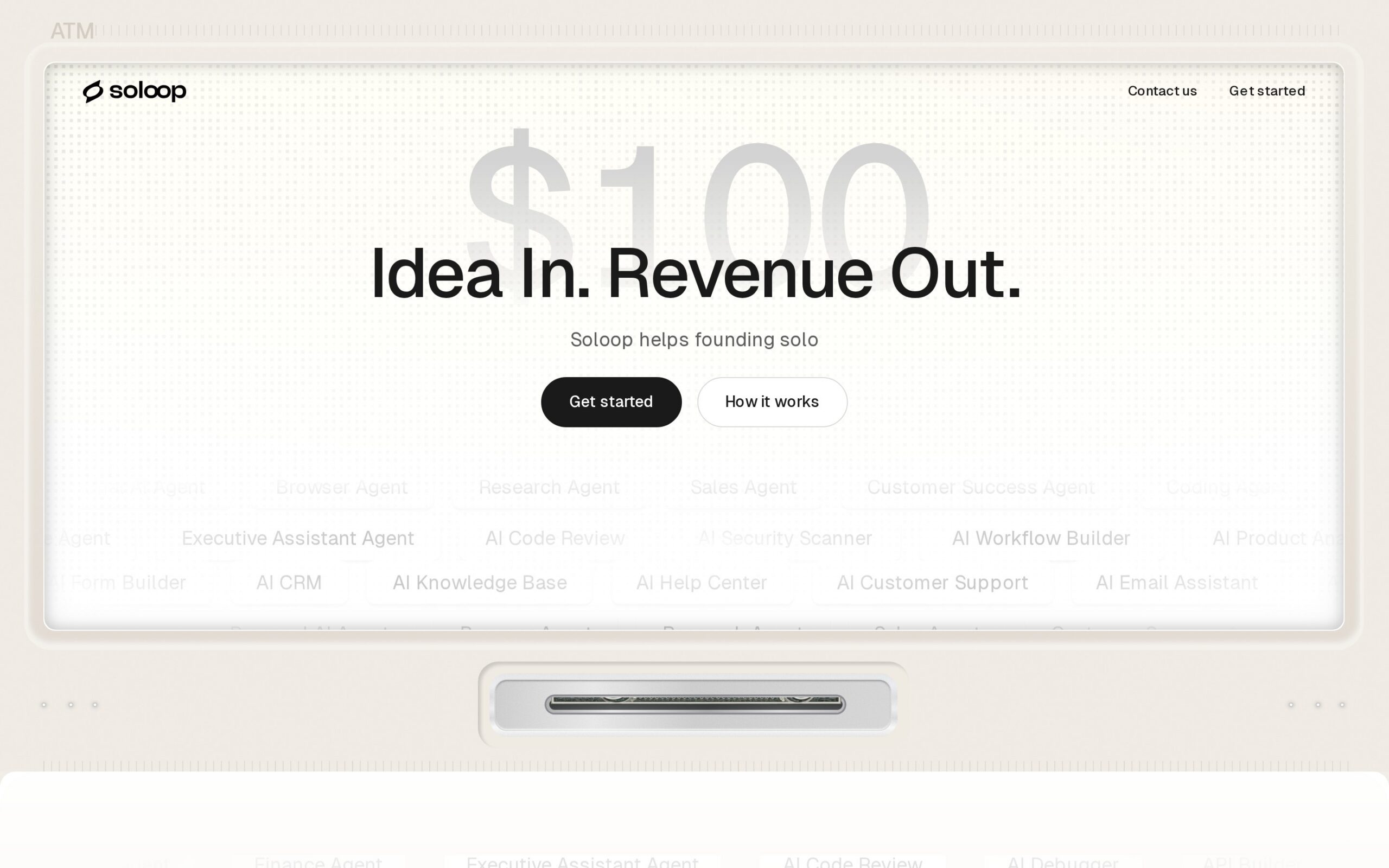
Soloop gives solo founders a coordinated set of AI role-agents: a CEO for strategy, a CTO for product work, a CMO for distribution. They operate through an approval queue, so founders can delegate planning and execution while keeping control over big decisions.
Why It's Trending
Launched publicly August 7, 2026, hit number two in early community rankings with 175 upvotes, and offered a 75% launch discount. Tiers range from free to $199+ per month, making its commercial bet visible unusually early.
Key Features
- Approval-first OS with coordinated CEO, CTO, and CMO agents.
- Multiple role-agents plan, build, and distribute work, escalating major actions for approval.
- A solo founder runs product and go-to-market workflows without hiring separate contractors.
Best For
- Solo founders managing a new business.
- Small teams coordinating product and marketing work.
- Entrepreneurs delegating execution while retaining approval control.
What Makes It Different
It's narrower than general agent platforms: Soloop packages several AI roles around the solo-founder workflow and makes approval a central product mechanic. It competes with generic AI assistants, no-code automation, project tools, and the human freelancers those tools often supplement.
Market Opportunity
Solo founders routinely combine project tools, contractors, personal assistants, and general-purpose AI. The $39 Builder, $99 Operator, and $199+ Team tiers show a direct monetization path, but we don't have customer or revenue figures.
Things to Consider
- Disclosed backing names early investors and incubators but no round size, valuation, or lead.
- Founders must trust role-agents with core business functions, not just isolated tasks.
- Credit-based pricing may get expensive as activity grows.
- It must outperform generic assistants plus existing SaaS tools, not just bundle them.
Our Verdict
One of the clearer experiments in founder-focused agent packaging. It fits entrepreneurs who want delegation without surrendering approval, but its future depends on measurable business outcomes, not just a convincing team-in-a-box metaphor.
Website: https://www.soloop.io/
5. Sentient OS

What It Does
A Mac and iPhone app that reads your local files, screenshots, emails, notes, and transcripts overnight, building a private knowledge base. You can ask other AI systems to use that context, while proactive computer-use agents complete tasks on your device.
Why It's Trending
A July 2026 launch note reported over 2,000 users in 48 hours, about 3,000 computer-use tasks, and 250,000+ seconds of agent activity. The waitlist hit roughly 2,500 sign-ups, and the project entered Y Combinator’s Fall 2026 batch.
Key Features
- On-device desktop app that builds a personal knowledge base from local data.
- Custom multimodal model handles overnight processing and proactive computer-use actions.
- Personalizes ChatGPT, Claude, and other agents with deep local context without uploading raw data.
Best For
- Privacy-conscious users building a private personal knowledge layer.
- Developers experimenting with local agent interfaces and computer use.
- Businesses evaluating privacy-first productivity agents on Apple silicon.
What Makes It Different
It processes your digital life locally and exposes the resulting knowledge base to multiple AIs through standard interfaces. They're measured against cloud assistants and the personal-intelligence layers major OS vendors could add directly.
Market Opportunity
Targets personal productivity, knowledge management, and private AI—markets growing as people accumulate more digital context. Early user and task counts are promising, but they don't establish retention, accuracy, or a sustainable business.
Things to Consider
- Free and open source as of September 2026, with no announced subscription or enterprise model.
- On-device processing of large personal datasets raises questions about energy use and model quality.
- Privacy safeguards are described in marketing but lack independent audits.
- Major OS vendors and AI labs could bundle competing personal-intelligence features.
Our Verdict
Merits attention from privacy-conscious Mac users and developers exploring ambient agents. The team needs to turn impressive early task volume into safe, controllable behavior and a business model before platform incumbents arrive.
Website: https://sentient-os.ai/
6. Coldtea
What It Does
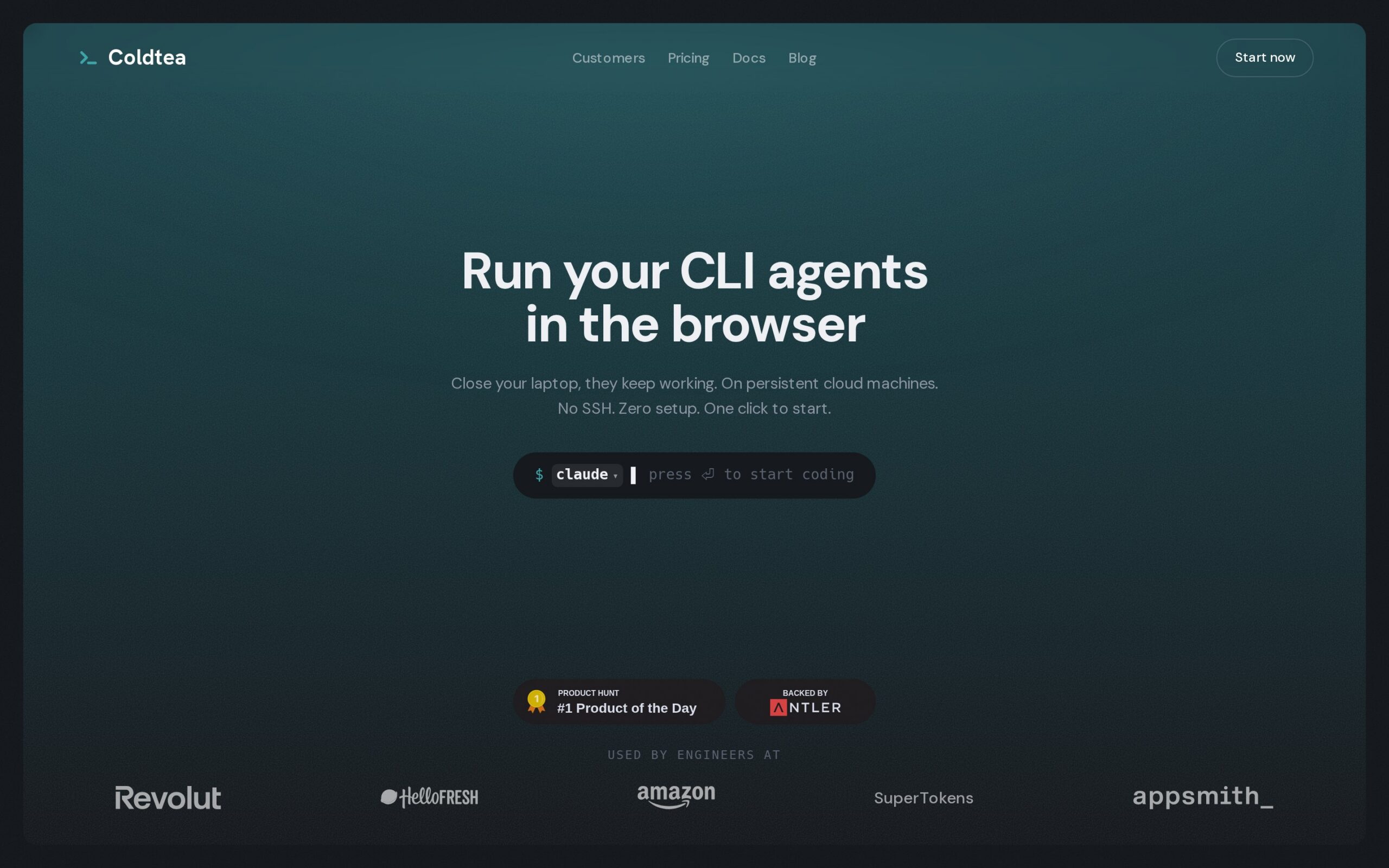
A desktop development environment that combines coding agents, visual quality assurance, regression testing, and production monitoring. After a commit, its agents can inspect logs and user sessions, diagnose problems, and open pull requests with fixes.
Why It's Trending
August–September 2026 coverage highlighted a commercial product, not a funding announcement. The free plan includes 2,000 agentic credits monthly; Pro costs $20 per user, and self-driving monitoring runs $49–$99 per project.
Key Features
- Desktop IDE combining multi-agent coding, visual QA, and production monitoring.
- Agents test interfaces, inspect logs and sessions, diagnose regressions, and open PRs.
- Automates the path from code change to test, monitoring, and repair for small teams.
Best For
- Developers handling coding, testing, and incident response in one desktop tool.
- Businesses reducing manual QA and production triage.
- Startups giving small teams broader software-delivery coverage.
What Makes It Different
It's an IDE, not another observability dashboard, embedding Claude Code, Codex, Gemini, and OpenCode alongside QA and monitoring agents. Competes with established IDEs, testing suites, observability vendors, and the AI assistants those incumbents are adding.
Market Opportunity
Software teams want fewer handoffs among coding, QA, monitoring, and incident response. The tiered pricing shows an attempt to capture that workflow directly, but public customer names, revenue, and usage data are absent.
Things to Consider
- 'Self-driving' QA and incident repair remain unproven on complex regressions and production edge cases.
- Larger developer-tool and observability companies can add similar AI features from stronger distribution positions.
- The credits model may struggle if intensive agent use costs more to serve than subscriptions recover.
- No funding rounds or investors are publicly disclosed.
Our Verdict
A credible watch for startup engineering teams willing to consolidate delivery tools. Keep production access review-heavy until its autonomous diagnosis and repair quality is demonstrated beyond directory reviews.
Website: https://www.coldtea.ai/
7. Prefactor
What It Does
Evaluates AI agents while they run in production. It scores individual agent steps, watches for quality drift and data risk, and can enforce policies that block actions or route uncertain decisions to human review.
Why It's Trending
August–September 2026 materials put agent reliability front and center for teams moving from demos to production. The company offers free tools, guides, and checklists, but hasn't announced a funding round or named customer base.
Key Features
- Agent evaluation runtime and observability layer for production traffic.
- Combines LLM-as-judge assessments with technical and qualitative metrics at the span level.
- Catches drift, regressions, and sensitive-data risks before an agent acts.
Best For
- Developers instrumenting and debugging multi-step agent runs.
- Enterprises enforcing policies around production AI actions.
- Businesses replacing ad hoc agent QA with continuous evaluation.
What Makes It Different
Prefactor evaluates every production run and every agent step, then connects scores to runtime enforcement. That's a more operational stance than basic tracing, but it competes with broad ML observability platforms now adding agent-specific evaluation.
Market Opportunity
As agents gain permission to act, teams need evidence they stay accurate, safe, and policy-compliant after deployment. Prefactor addresses a real control point, though we don't have customers, revenue, or independent proof its evaluations improve outcomes.
Things to Consider
- Teams may build agent observability and evaluation in-house instead of buying a separate runtime.
- Compatibility with diverse frameworks and proprietary infrastructure isn't yet established publicly.
- LLM-as-judge systems may be too inconsistent for high-stakes governance without additional controls.
- The company has disclosed no funding, valuation, or named investors.
Our Verdict
A strong infrastructure watch for teams shipping agents into consequential workflows. Its value hinges on whether its evaluations correlate with real-world quality and its integration burden stays below the cost of building governance internally.
Website: https://prefactor.tech/
8. Switch
What It Does
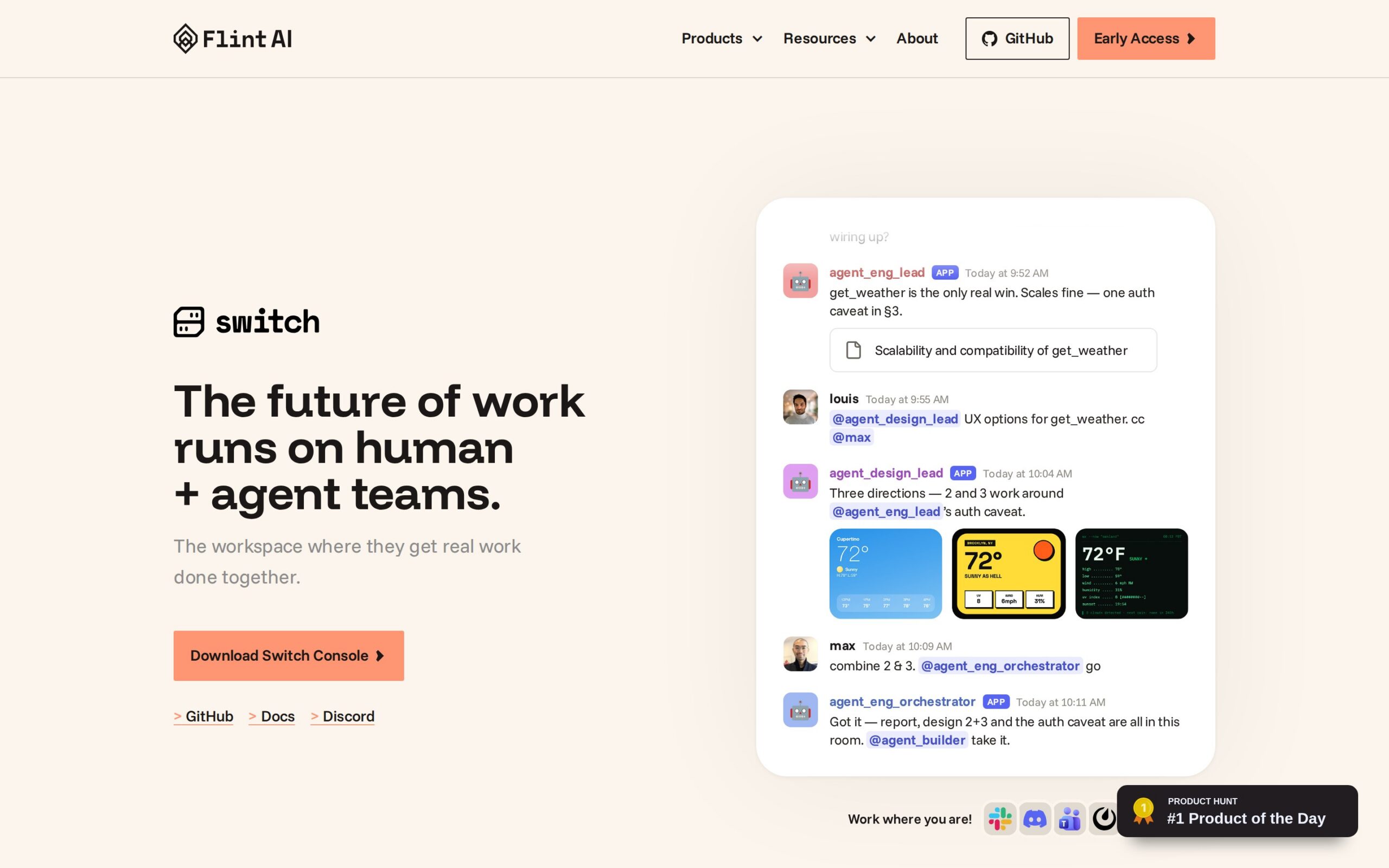
An open-source layer that lets AI agents join Slack, Microsoft Teams, Discord, Telegram, and Mattermost as named participants. Agents share the same channels and conversation history as human teammates, so you don't have to copy context into a separate AI dashboard.
Why It's Trending
SandboxAQ's project drew attention in September 2026 with positioning as open source, self-hostable, and deployable in minutes. The timing matters: teams are experimenting with agents but hate abandoning the collaboration tools where their conversations already live.
Key Features
- Protocol and framework for placing agents inside existing collaboration channels.
- Connects agents from Claude Code, OpenAI, LangChain, Bedrock, and other ecosystems.
- Gives engineering and enterprise teams shared agent participation without a new messaging app.
Best For
- Developers integrating agents into existing team channels.
- Enterprises self-hosting agent infrastructure and access controls.
- Businesses avoiding bespoke bot integrations and context copying.
What Makes It Different
Switch is explicitly not a messaging app; it's an open protocol-like layer for bringing agents from different providers into existing rooms. Competes with standalone agent dashboards, custom bots, and managed collaboration products that control both the interface and model stack.
Market Opportunity
Every organization already using workplace chat is a potential distribution surface for agents. Switch has a strong adoption wedge through self-hosting, but its commercial future depends on whether SandboxAQ can monetize support, hosting, or consulting around an open-source project.
Things to Consider
- No standalone funding or revenue model is disclosed—it's a SandboxAQ initiative.
- Long-term compatibility depends on rapidly changing agent frameworks and collaboration APIs.
- Enterprises may prefer managed platforms over operating critical agent infrastructure themselves.
- Adoption claims describe use by teams but provide no public customer counts or revenue.
Our Verdict
Deserves attention from engineering teams that want agents in existing channels without vendor lock-in. Its business value depends on durable compatibility and a credible support model around the open-source core.
Website: https://www.flintai.dev/products/switch
9. Wispr Flow Notetaker
What It Does
Records in-person and online meetings, identifies speakers and names, and produces transcripts and actionable summaries. Works across Zoom, Google Meet, Teams, Slack huddles, Discord, browser calls, and room conversations—no meeting bot required.
Why It's Trending
A September 17, 2026 launch introduced Notetaker as Wispr Flow's first product beyond dictation. The pitch lands on a familiar pain point with a useful twist: one tool for online and in-person conversations, without inviting a bot into every call.
Key Features
- Cross-platform meeting recorder with transcription and summary generation.
- Speaker labeling, name recognition, personal dictionaries, and meeting detection.
- Captures in-room and remote discussions without manual notes or third-party call bots.
Best For
- Users remembering personal meetings and conversations.
- Businesses producing follow-ups and action items automatically.
- Enterprises standardizing meeting records across collaboration tools.
What Makes It Different
Wispr Flow emphasizes bot-free capture, in-person recording, calendar-aware meeting detection, and accuracy for names and speakers. Measured against Fireflies, Otter, and other established recorders that already own much of the online-notes workflow.
Market Opportunity
Meeting data is valuable when it becomes searchable context and assigned follow-up, not just a transcript. Wispr Flow is expanding beyond dictation into that workflow, but the launch provides no customer counts, logos, revenue, or pricing detail.
Things to Consider
- Comparative accuracy against Fireflies and Otter isn't published.
- Enterprises must assess consent, privacy, and governance for sensitive in-person recordings.
- Pricing and large-team administration aren't clear from the launch materials.
- Competitors can add in-person capture and cross-platform support.
Our Verdict
A sensible watch for teams that need bot-free records across room and online meetings. Adoption hinges on transcription accuracy, governance, and whether its broader workflow beats established recorders.
Website: https://wisprflow.ai/notetaker
10. Hey Noah

What It Does
An AI executive assistant that works inside SMS, email, WhatsApp, and Slack—no separate dashboard. It schedules meetings, sends reminders, follows up with contacts, and coordinates relationships for founders and senior leaders.
Why It's Trending
By mid-September 2026, Hey Noah was offering cohort-based early access at $49 per month, a concrete commercial test without a public venture round. Founder Ashish Toshniwal brings a prior bootstrapped business history with ~$100 million in annual revenue and 47 Fortune 500 clients.
Key Features
- Cross-channel executive assistant for scheduling and relationship management.
- Negotiates meeting times, sends outbound messages, and manages follow-ups autonomously.
- Turns event contacts and professional relationships into scheduled conversations without manual coordination.
Best For
- Founders managing calendars and networks.
- Businesses automating executive outreach and follow-up.
- Enterprises supporting senior leaders with high-volume coordination.
What Makes It Different
The memorable distinction: “Claude talks to you; Noah talks to your network.” It acts through channels people already use, competing with human executive assistants, scheduling products, generic agents, and motion-style productivity tools.
Market Opportunity
Targets the expensive time sink around calendars, reminders, and relationship maintenance. The $49 early-access price suggests a direct-revenue path, but there are no public user, retention, or revenue figures to show autonomous outreach works at scale.
Things to Consider
- Unsupervised outbound communication creates reputational risk if preferences, tone, or relationships are misunderstood.
- No publicly detailed venture round, valuation, or investor base.
- Larger organizations may need controls and workflows beyond founder-level coordination.
- Established schedulers, generic LLM agents, and human assistants already serve adjacent needs.
Our Verdict
Fits founders who want an assistant to manage real relationships across familiar channels. Maintain approval safeguards until the product proves it can handle sensitive contacts and scheduling edge cases reliably.
Website: https://www.heynoah.io/
The pattern's unmistakable. The next wave isn't another chat window. It's infrastructure and workflow—agents inside existing tools, context that follows teams, controls that make autonomy less reckless.
The winners will be the startups that convert launch curiosity into repeatable, measurable work you can actually run a business on.