
Look at the numbers: 52,260 stars for a diagram generator. Then 22,000 more for a local voice studio. Developers aren't waiting for a grand AI platform anymore.
They're collecting small, sharp tools—building blocks for serious agent work. This month's list ranks ten projects by grassroots momentum. Some you can clone and run tonight.
Others are ambitious demos where the concept outpaces the docs. Every one earned its spot by changing what you can build, test, explain, or ship before Monday.
1. archify — Developer Tool
Developer Tool
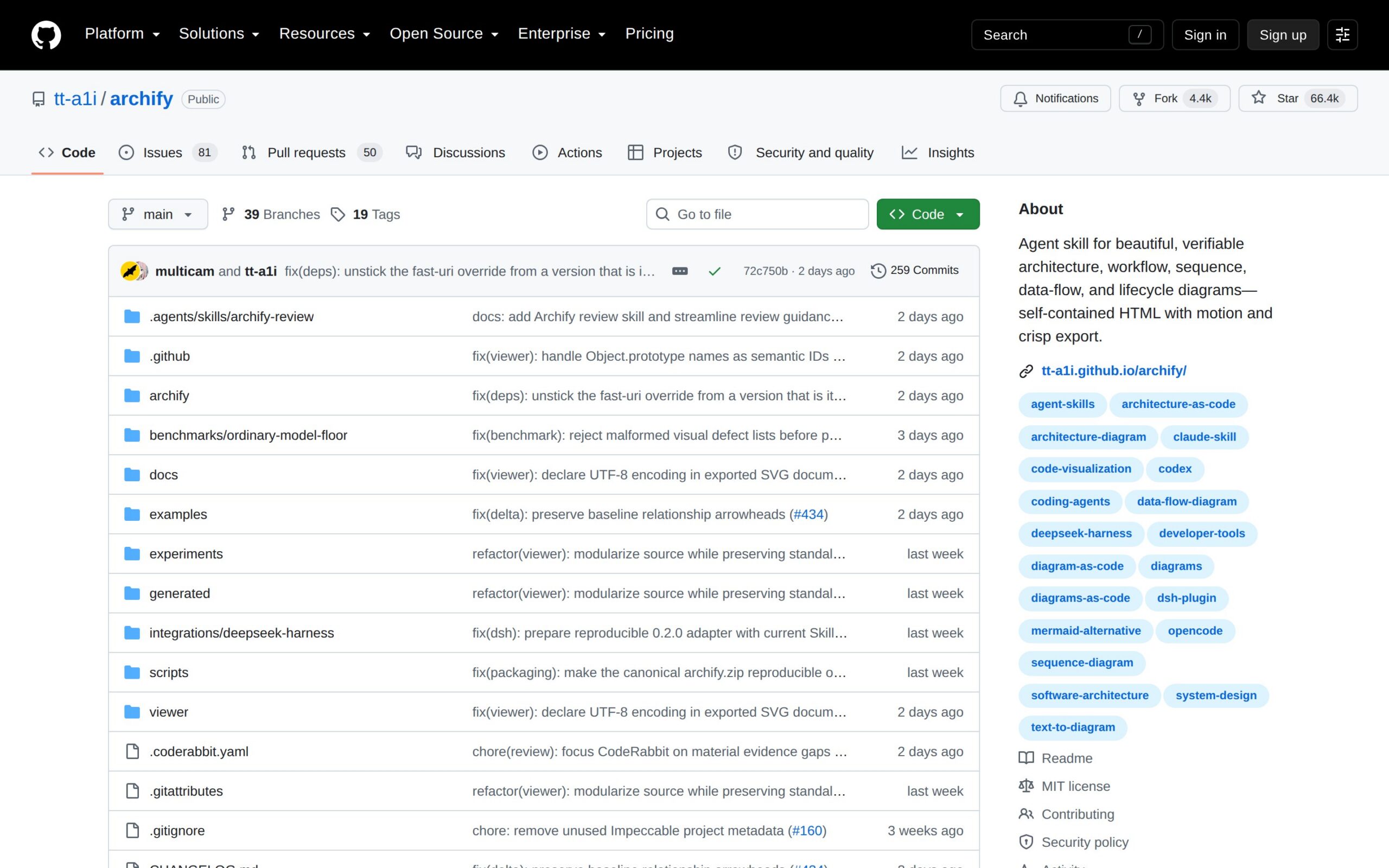
Give archify a system design and it spits out a self-contained HTML diagram. The diagrams move. They export crisply.
It's a JavaScript skill for turning descriptions into shareable visual artifacts.
It jumped 52,260 stars this month. The repo hit 66,334 stars, and a September 18 push shows it's still moving.
What You'd Build With It:
- Generate a service data-flow diagram from a design brief.
- Create an animated sequence diagram for a code review.
- Export clean architecture diagrams for a project handoff.
- Alternative To: Alternative to Mermaid and manually maintained draw.io diagrams.
- Stack: JavaScript; MIT-licensed. No GPU, API key, or paid model requirement noted.
- Maturity: Born April 2026. Young, with 131 open issues.
- Skill Level: Beginner friendly
- Watch Out: Visual polish is winning. Issue closure is not. That 131-issue backlog is the warning.
- Our Verdict: Clone it tonight if architecture docs are a bottleneck. The output is immediate, but have a human check it before treating it as gospel.
- Setup Difficulty: ★☆☆
- GitHub: https://github.com/tt-a1i/archify
2. diagram-design — Developer Tool
Developer Tool
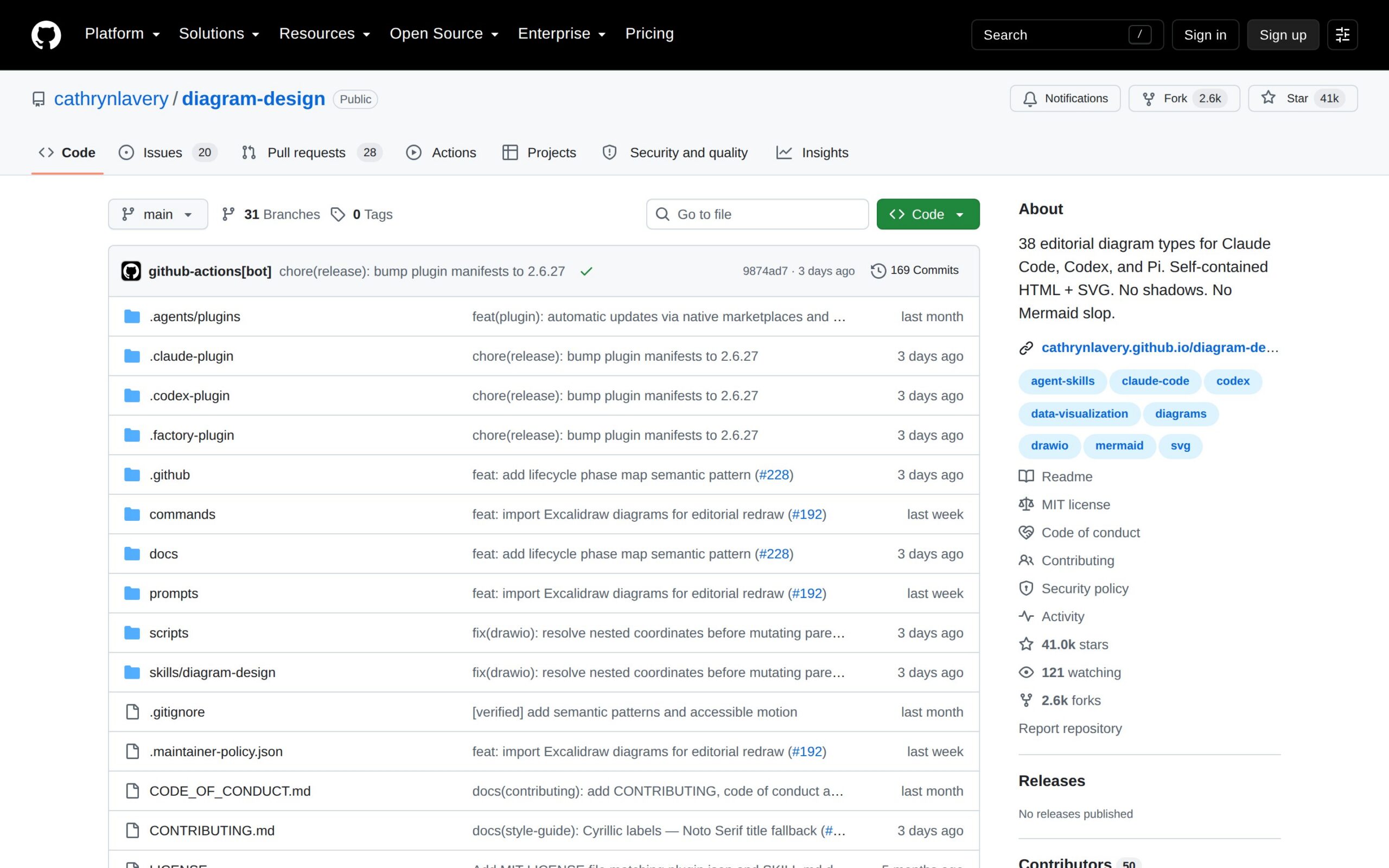
A collection of 38 editorial diagram types built in HTML, meant for Claude Code, Codex, and Pi. It makes self-contained HTML and SVG.
Up 20,738 stars this month, to 40,976. A September 15 update shows developers pitting it against usual diagram tools.
What You'd Build With It:
- Build a polished system-design page from a repo explainer.
- Turn a code review into an annotated, presentation-ready SVG.
- Keep diagrams consistent across technical docs.
- Alternative To: Alternative to Mermaid for presentation-ready technical diagrams.
- Stack: HTML-centered. Targets Claude Code, Codex, and Pi. No GPU, API, or paid model requirement noted.
- Maturity: Also from April 2026. It has 48 open issues.
- Skill Level: Comfortable with the terminal
- Watch Out: Its promise hangs on two unquantified things: agent compatibility and generated HTML quality.
- Our Verdict: Perfect for docs-heavy teams tired of default Markdown diagrams. Clone it, but keep a designer in the review loop for customer-facing work.
- Setup Difficulty: ★☆☆
- GitHub: https://github.com/cathrynlavery/diagram-design
3. freellmapi — Inference
Inference
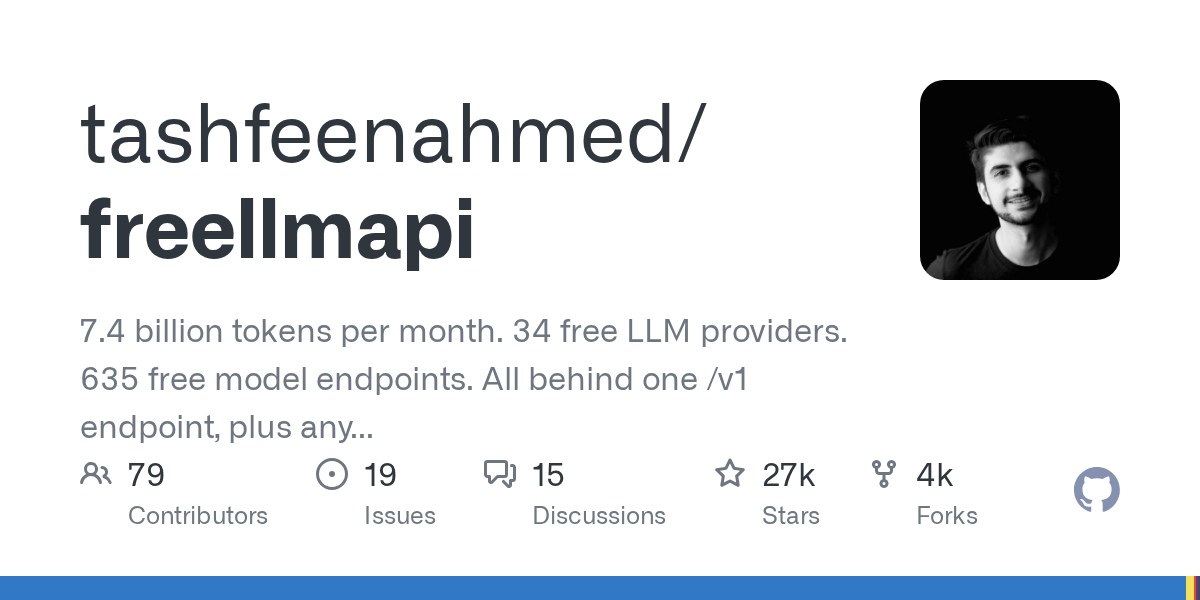
A TypeScript gateway. It puts 34 free LLM providers and 635 model endpoints behind a single OpenAI-compatible /v1 endpoint. Adds routing, failover, and encrypted keys.
Gained 8,304 stars this month, pushed September 17. The headline—7.4 billion tokens a month—makes it impossible to miss.
What You'd Build With It:
- Test an agent against a dozen models without rewriting your client.
- Keep a prototype alive when one free endpoint dies.
- Build a model-comparison harness behind one API.
- Alternative To: Alternative to writing a custom multi-provider gateway or locking into a single hosted LLM API.
- Stack: TypeScript. Needs provider endpoints and keys. No GPU or paid model requirement noted.
- Maturity: Created April 2026. Has 34 open issues and is for personal experimentation.
- Skill Level: Comfortable with the terminal
- Watch Out: You’re building on shifting sand. Free endpoints vanish. Provider availability isn’t a contract.
- Our Verdict: Clone it tonight for experiments needing model variety and failover. It’s a playground, not a production backbone.
- Setup Difficulty: ★★☆
- GitHub: https://github.com/tashfeenahmed/freellmapi
4. minimind — Training & Fine-tuning
Training & Fine-tuning
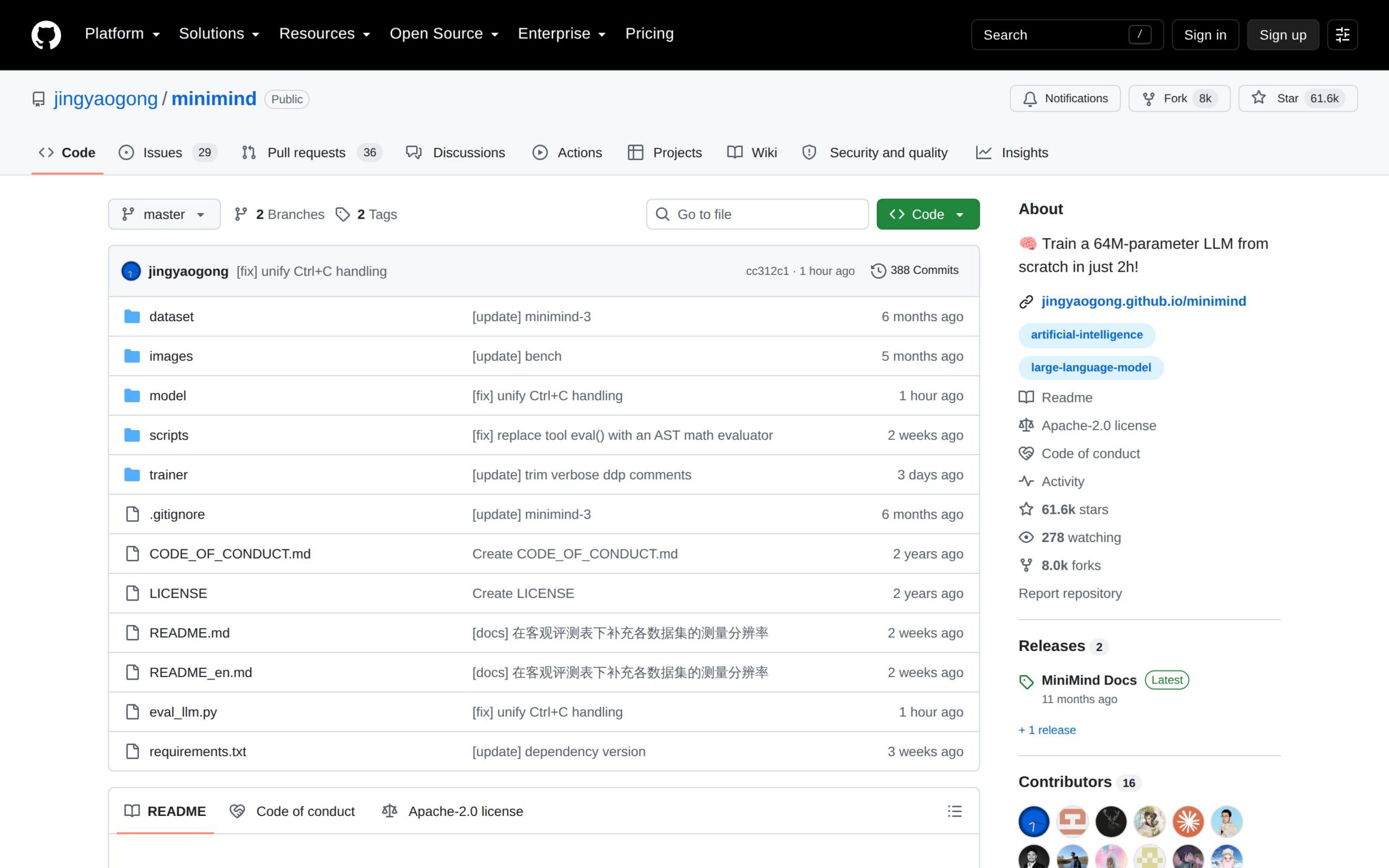
A Python project for building a 64-million-parameter language model from scratch. It lets developers inspect a complete small-model training path.
Up 6,867 stars this month, pushed September 18. The two-hour training claim is a siren call for devs wanting to understand the mechanics.
What You'd Build With It:
- Study the components of a small language-model training run.
- Modify a training experiment to see what happens.
- Use it as a teaching project for tokenization and model training.
- Alternative To: Alternative to learning LLM training only through hosted notebooks or black-box APIs.
- Stack: Python. No specific installation, GPU, API, or paid model requirements noted.
- Maturity: Created July 2024, recently active. 65 open issues. Its small size is the point.
- Skill Level: Experienced developer
- Watch Out: A 64M-parameter model is a toy for learning. Don’t compare its behavior to current large models.
- Our Verdict: Clone it tonight if you’re serious about learning. It’s a compact training lab, not a deployable model source.
- Setup Difficulty: ★★☆
- GitHub: https://github.com/jingyaogong/minimind
5. munder-difflin — Agents
Agents

A local TypeScript multi-agent harness. It sets up an office of agents around your existing Claude Code and Codex subscriptions. Coordinates separate roles.
Gained 6,168 stars this month, pushed September 17, now at 7,580. The sharp rise shows interest in turning individual coding agents into a working group.
What You'd Build With It:
- Split research, implementation, and review across different agents.
- Run a local planning office around an existing coding subscription.
- Prototype multi-agent memory and orchestration.
- Alternative To: Alternative to assembling a multi-agent harness around Claude Code or Codex by hand.
- Stack: TypeScript with Electron and local-first components. Relies on existing Claude Code/Codex subs. No GPU requirement noted.
- Maturity: Born May 2026. Has 187 open issues—a huge warning.
- Skill Level: Experienced developer
- Watch Out: Subscription dependence and that massive issue backlog make it a bad bet for unattended production automation.
- Our Verdict: Clone it tonight to explore agent-team patterns with your existing subs. But put approval gates in place before multiple agents touch a real codebase.
- Setup Difficulty: ★★☆
- GitHub: https://github.com/chaitanyagiri/munder-difflin
6. maka — Agents
Agents
A TypeScript agent workspace and CLI that keeps a complete record of what an agent did. It uses event sourcing, making tool use and decisions inspectable.
Added 4,224 stars this month, pushed September 18. An Apache incubating project with an audit-focused design gives it credibility a one-file demo can’t match.
What You'd Build With It:
- Record every tool call an agent makes during a coding task.
- Review an agent session after an unexpected change.
- Build a local workspace where actions can be replayed or inspected.
- Alternative To: Alternative to opaque agent runners that only keep the final answer.
- Stack: TypeScript with CLI and Electron components. No GPU, API key, or paid model requirement noted.
- Maturity: Created May 2026. Has 484 open issues and is an Apache incubating project.
- Skill Level: Experienced developer
- Watch Out: The auditability idea is mature. The implementation, with nearly 500 open issues, may not be.
- Our Verdict: Star it and wait for the docs if traceability is your top priority. The concept fits serious agent ops, but that backlog argues against making it your only runtime.
- Setup Difficulty: ★★★
- GitHub: https://github.com/apache/maka
7. modular — Inference
Inference
This platform repo includes MAX and the Mojo programming language. It targets machine-learning development through a dedicated language and platform.
Still active, with a September 17 push. Added 3,082 stars this month, with 29,813 total stars showing sustained attention.
What You'd Build With It:
- Explore AI development in the Mojo language.
- Evaluate MAX as a platform for machine-learning work.
- Study an alternative language-and-runtime approach to AI software.
- Alternative To: Alternative to conventional Python-centered machine-learning stacks, though not a one-to-one comparison.
- Stack: Mojo. The repository includes MAX and Mojo. No GPU, API-key, or paid-model requirements noted.
- Maturity: Created April 2023. The oldest project here, but its 1,157 open issues show a massive surface area.
- Skill Level: Deep expertise needed
- Watch Out: The NOASSERTION license field and huge issue count mean you need to review carefully before any commercial adoption.
- Our Verdict: Star it and wait for the docs unless your team is ready to evaluate a whole new language and platform.
- Setup Difficulty: ★★★
- GitHub: https://github.com/modular/modular
8. agent-skills — LLM Tooling
LLM Tooling
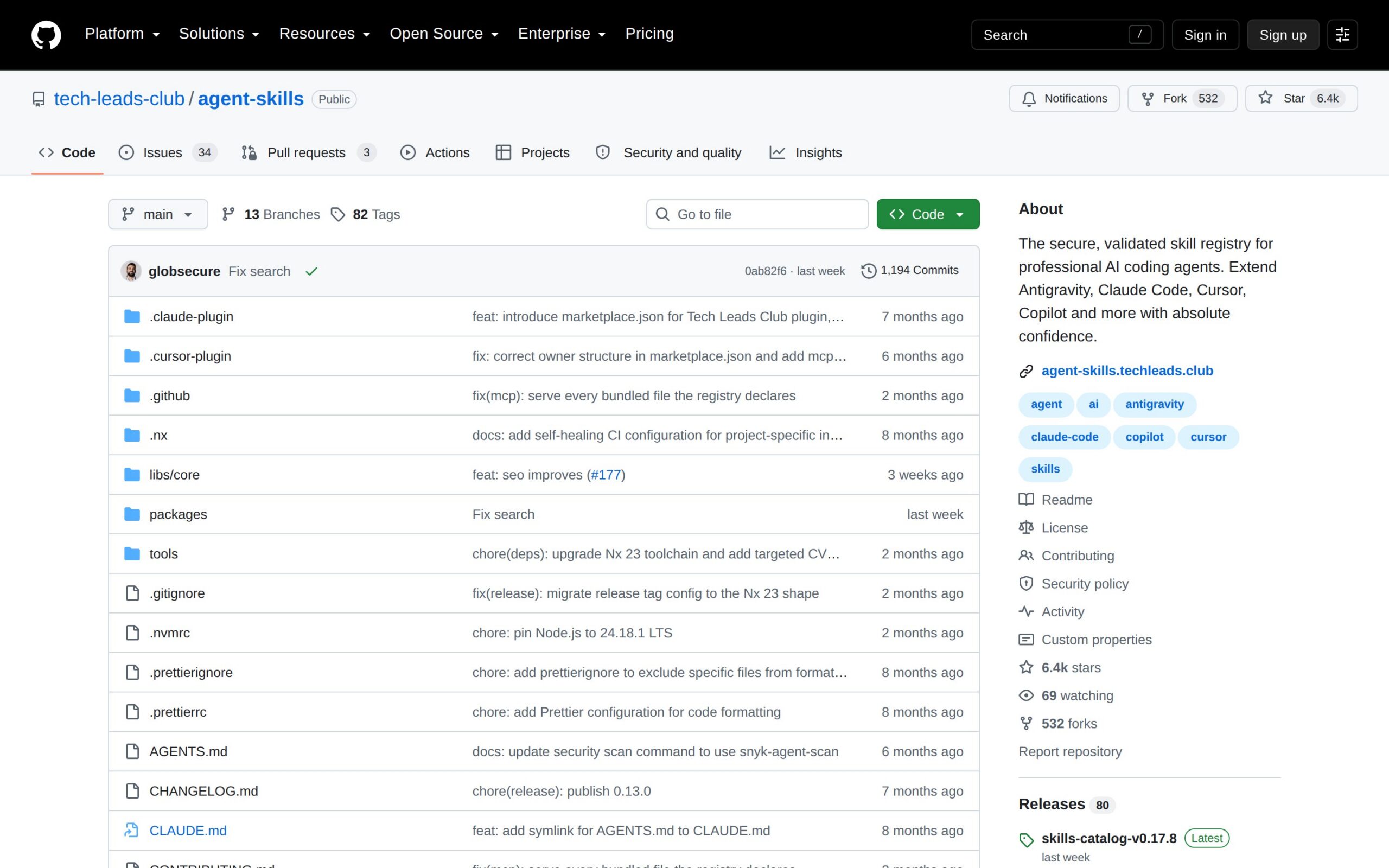
A TypeScript registry for reusable skills used by professional coding agents. It’s meant to extend tools like Antigravity, Claude Code, Cursor, and Copilot.
Up 1,398 stars this month, updated September 12. The smaller number sits right on the emerging problem: how to distribute agent behavior safely.
What You'd Build With It:
- Browse reusable skills for your coding agent.
- Standardize skills across a development team.
- Evaluate a registry approach before building an internal catalog.
- Alternative To: Alternative to maintaining private, scattered folders of coding-agent prompts and skills.
- Stack: TypeScript. Supports several named coding agents. No GPU, API, or paid model requirement noted.
- Maturity: Created January 2026. 37 open issues, and it uses a NOASSERTION license field.
- Skill Level: Comfortable with the terminal
- Watch Out: The description calls the registry secure and validated. The payload provides zero independent verification.
- Our Verdict: Star it and wait for the docs if your team needs shared agent skills. Inspect every skill before installation.
- Setup Difficulty: ★★☆
- GitHub: https://github.com/tech-leads-club/agent-skills
9. VoiceStudio — Audio & Speech
Audio & Speech
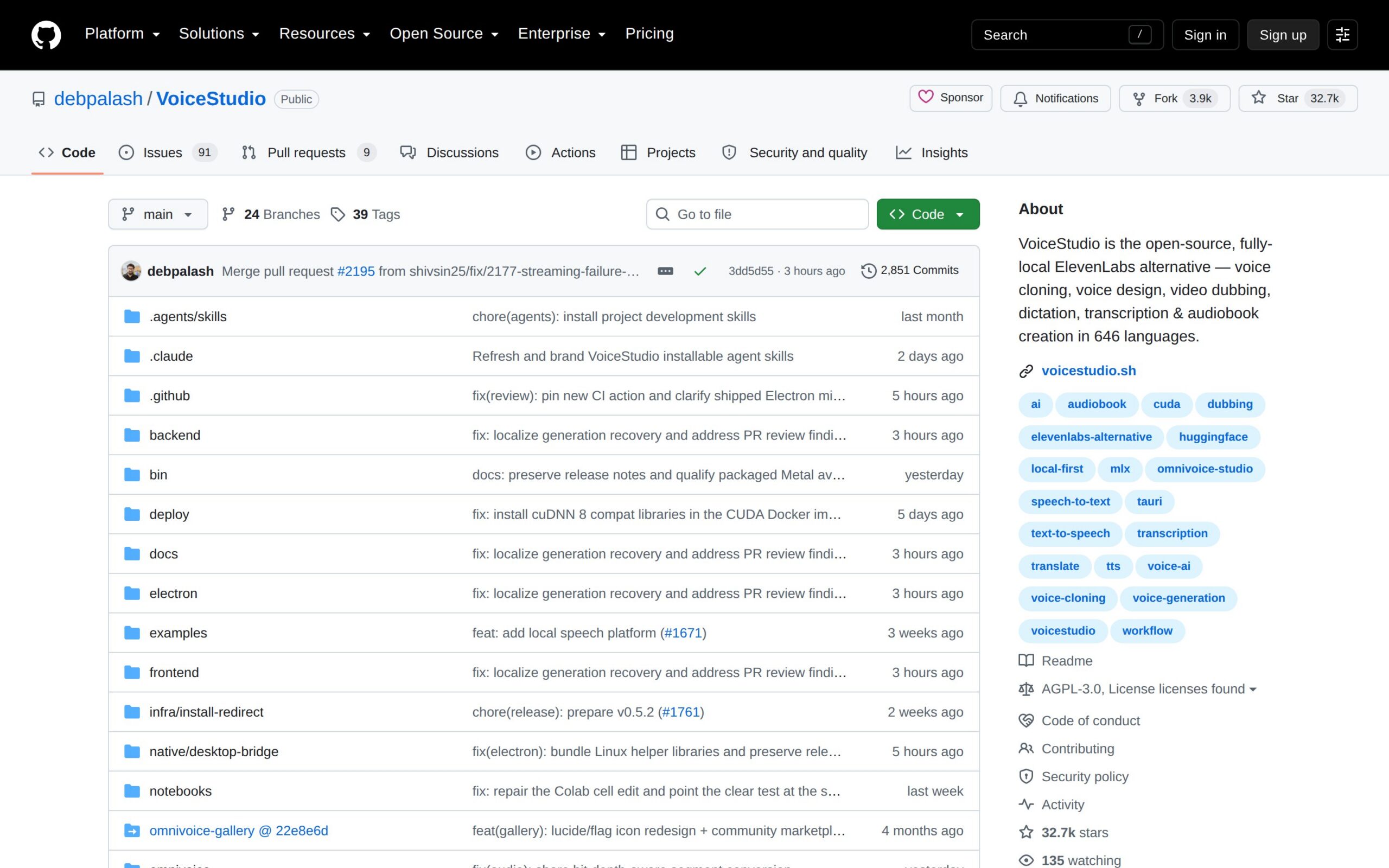
A Python desktop workflow for local voice cloning, design, dubbing, dictation, transcription, and audiobook creation. It’s a fully local alternative to hosted voice services.
Jumped 22,507 stars this month, hit 32,655, with a September 18 push. That signals real curiosity about local speech tooling.
What You'd Build With It:
- Prototype a local video-dubbing workflow.
- Turn a long text into an audiobook.
- Transcribe and dictate without a hosted voice service.
- Alternative To: Alternative to ElevenLabs.
- Stack: Python with CUDA and MLX topics, plus a Tauri interface. No exact hardware or API-key requirements specified.
- Maturity: Created April 2026. 100 open issues, under the AGPL-3.0 license.
- Skill Level: Experienced developer
- Watch Out: Local voice cloning can hammer your hardware. And AGPL-3.0 obligations need a legal review before redistribution.
- Our Verdict: Clone it tonight if you’re building local audio prototypes. Teams shipping commercially should validate hardware needs and AGPL-3.0 obligations first.
- Setup Difficulty: ★★★
- GitHub: https://github.com/debpalash/VoiceStudio
10. awesome-gpt-image-2 — Image & Video
Image & Video
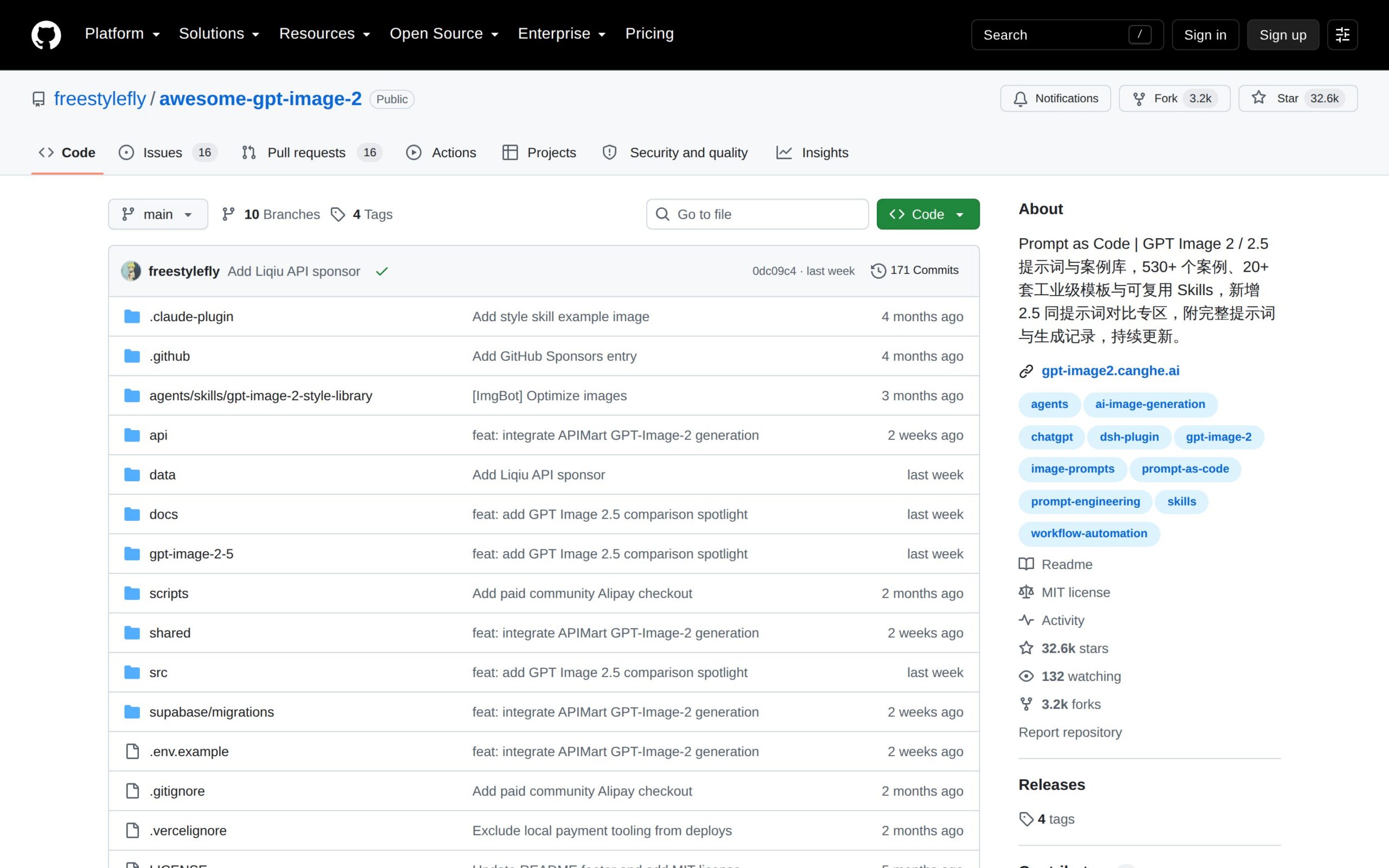
A JavaScript library and example collection that treats image prompts as reusable code. Holds over 530 examples, 20+ industry templates, and records of results for GPT Image 2 and 2.5.
Added 21,929 stars this month, now at 32,605. Its September 11 update and prompt-as-code framing match developers’ need to version visual generation work.
What You'd Build With It:
- Build a repeatable library of product-image prompts.
- Compare prompts between GPT Image 2 and 2.5.
- Create a team template for branded visual generation.
- Alternative To: Alternative to ad hoc prompt collections and manual image-generation experiments.
- Stack: JavaScript. No image API setup, GPU, or paid model requirements specified.
- Maturity: Created April 2026. 32 open issues. Focused on examples and templates.
- Skill Level: Beginner friendly
- Watch Out: Prompt records improve repeatability, but don’t guarantee consistent outputs when the model version changes.
- Our Verdict: Clone it tonight if your team is standardizing image-generation experiments. Treat it as a prompt workflow and reference library, not a self-contained engine.
- Setup Difficulty: ★☆☆
- GitHub: https://github.com/freestylefly/awesome-gpt-image-2
The real signal this month is specialization. Diagrams. Traceable agents.
Model routing. Small-scale training. Local media.
Archify and freellmapi are the quickest practical wins you’ll get. Maka, MiniMind, and Modular ask for more patience. The rest are worth trying right now, precisely because their limits are still in plain sight.